

The journey of Cuprum Coin over the past four years reflects the evolution of not only a digital asset, but of a founder’s persistence to bring scientific integrity, regulatory alignment, and real-world impact to the world of tokenized materials. From an experimental token on a forked blockchain to a sovereign-grade asset under Materra, the story of Cuprum Coin is a lesson in vision, mistakes, and resolution.
⸻
Concept 1 (2021): An Idea in Motion, but Disconnected from Matter
The original Cuprum Coin, launched under the ticker CUC in 2021, was built on a forked version of the Tezos blockchain. It was positioned as a digital intermediary—a token that referenced a high-value commodity: ultra-high-purity copper powder (1 micron in size). But while the idea was bold, the infrastructure was fragile.
At that time, the token was not directly linked to the asset itself. The copper powder was positioned as a guarantee rather than a verifiable, accessible backing. The ecosystem surrounding the project was underdeveloped, and most critically, there was no bridge between the token and physical custody, certification, or scientific validation of the material. The project relied on secondary market dynamics and general belief, but lacked transparency and technical anchoring. Still, it was a step—the seed of a future system.
⸻
Concept 2 (2023): Strategic, but Misaligned
Two years later, Cuprum Coin migrated to BNB Chain, maintaining its ticker (CUC) and attempting to introduce more market accessibility. It was positioned as a token representing ultra-high-purity nano copper powder, with a strategic partner claiming ownership of the asset.
At first, it seemed like progress: a more advanced material, a wider blockchain audience, and institutional dialogue. But under scrutiny, the structure proved flawed. Ownership of the asset was contested—three different parties claimed the ownership—and no verifiable documentation of its production or chain of custody ever surfaced. The strategic partner claimed to own copper mines and a processing facility, claims which were later revealed to be entirely false. The companies involved were shrouded in unclear ownership, with shadowy figures behind key entities. What emerged was not a breakthrough, but a crisis of trust and credibility.
This phase of Cuprum Coin left many disillusioned. Yet, it also made something clear: to build a lasting and trustworthy scientific asset ecosystem, you must own the science, the process, and the governance.
⸻
Concept 3 (2025): Cuprum Coin RWA (CUNP) – Materra-Grade Reality
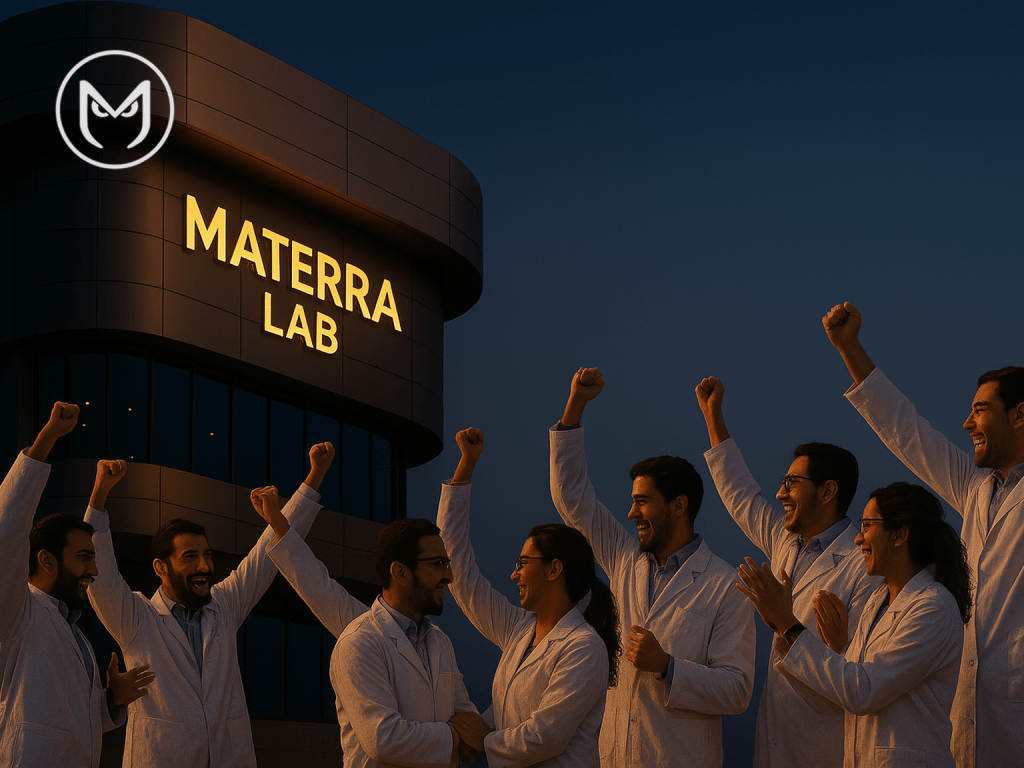
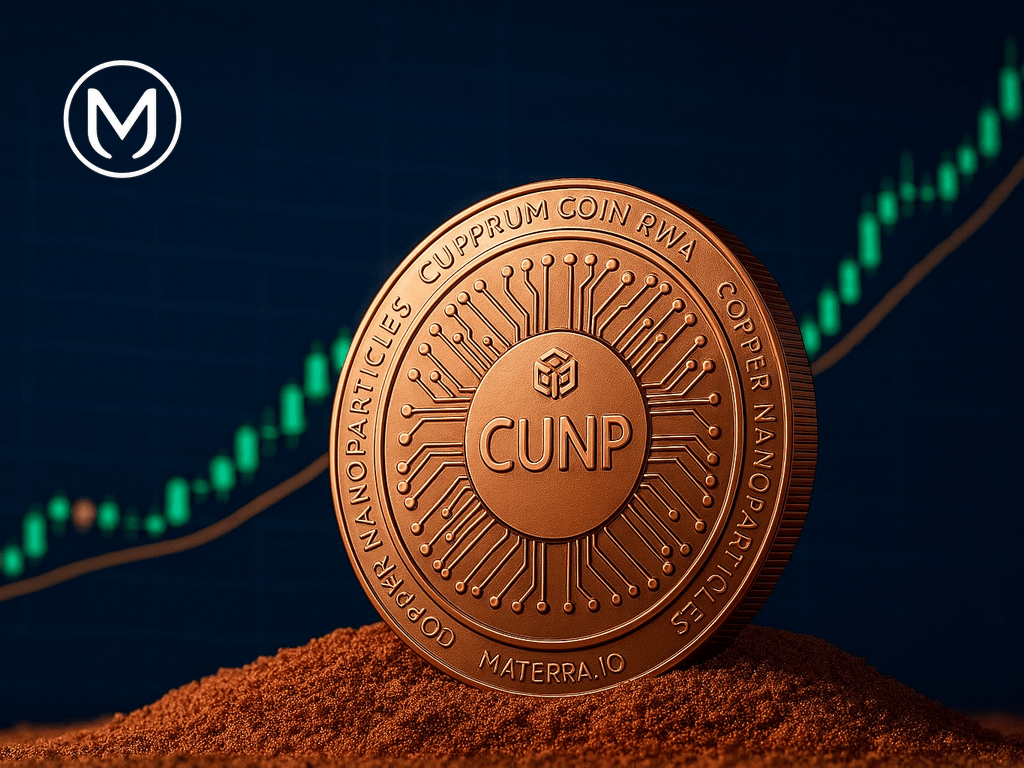
In 2025, the project was reborn—not rebranded, but restructured under the newly founded Materra Lab FZCO, a UAE-pre-registered, DMCC-initial-approved company with a clean cap table and sovereign-grade intent. This new iteration, Cuprum Coin RWA (ticker: CUNP), is no longer a promise—it is a product of verified science and institutional structure.
The copper itself is now ultra-high-purity nano copper, produced or validated by Materra’s internal scientific council—comprising experts from the UAE. It will be stored under verifiable protocols and will be traded on Nano Commex, Materra’s upcoming regulated exchange platform. The token is no longer a proxy—it is an on-chain representation of a real, controlled, and certified asset, positioned for institutional and sovereign use cases.
CUNP is not about hype. It is about infrastructure. Built under UAE regulation (with VARA licensing in preparation), backed by physical production, and governed by scientific integrity, it is the realization of what the first two versions of Cuprum Coin only gestured toward.
⸻
Conclusion: From Experiment to Infrastructure
The evolution of Cuprum Coin reveals a deeper truth about real-world asset tokenization—especially when the asset in question is scientific, rare, and materially sensitive.
What became clear through this journey is that a token can never represent a second-hand or externally sourced material with full trust. When you’re dealing with ultra-high-purity nano copper—an asset that is packaged, sealed, and sensitive to contamination—there is no real way to verify its quality post-production. You cannot unpack and test every gram. You cannot rely on external claims. And you certainly cannot build a financial ecosystem around something that may or may not be what it says it is.
In the end, you must own the science.
That’s why Materra’s Cuprum Coin RWA (CUNP) is different. It is not backed by rumors of production or unverified third-party assets. It is produced in-house, under controlled conditions, by a world-class scientific council who stand behind every batch—physically, professionally, and legally.
This is the only way to tokenize scientific commodities: at the source, with the science, in full regulatory view.
CUNP is no longer an experiment. It is infrastructure—trusted because it’s verifiable, valuable because it’s real. And it is only the beginning.
Note! “Cuprum Coin and Materra Lab FZCO are not currently authorised to provide virtual asset services in or from Dubai. All project information is for educational and illustrative purposes only, pending regulatory approval.”
Materra Team





 Cuprum Coin